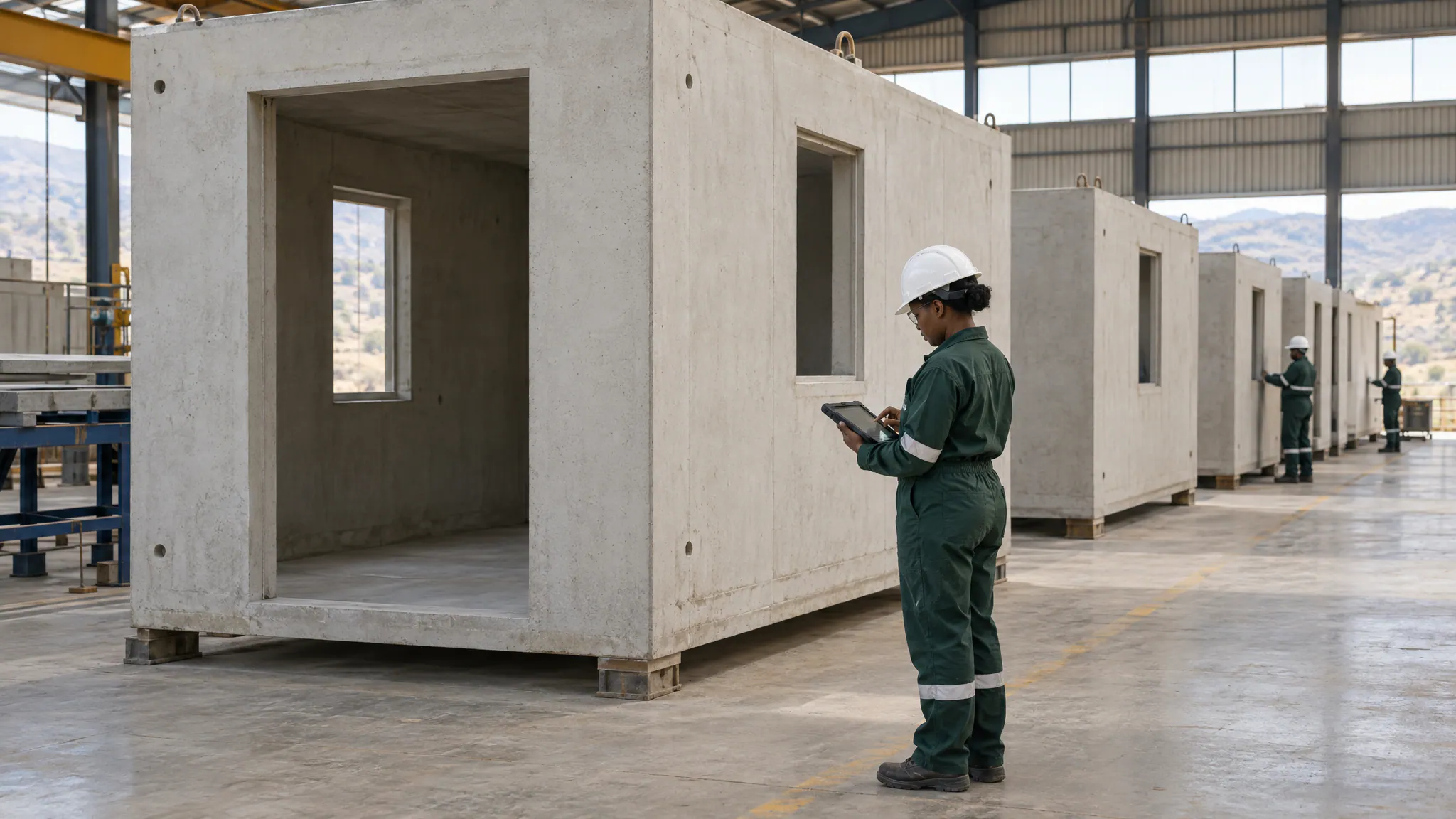
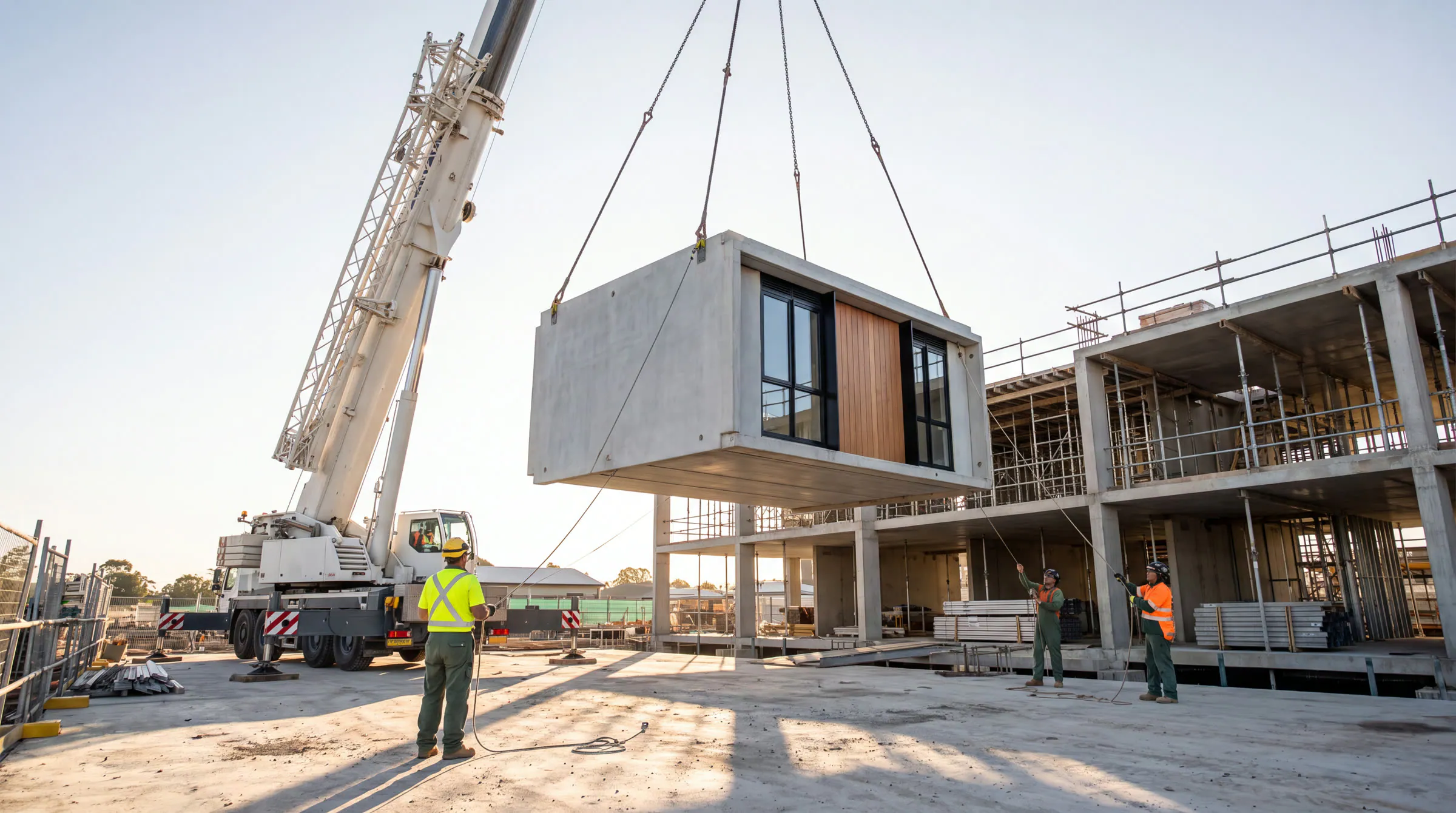
Site construction is a sequence of one-off events. Weather, trade availability, late information and drawing changes all land on the critical path, and each one can move the finish date. Factory production replaces that sequence with a routine: the same six operations, in the same order, indoors, every cycle.
That repetition is less an efficiency story than a certainty story. A fixed cycle produces a predictable output, and a predictable output is the only honest basis for a delivery date a developer can build a programme around.
A fixed cycle is the only honest basis for a delivery date.
01
The cycle, as planned
Our factory is designed around one cast per mould per production day. That is a planning baseline, not yet a measured rate. We will prove it during commissioning, when the first modules are cast, tested and accepted, and we will publish the result.
The cycle
 01
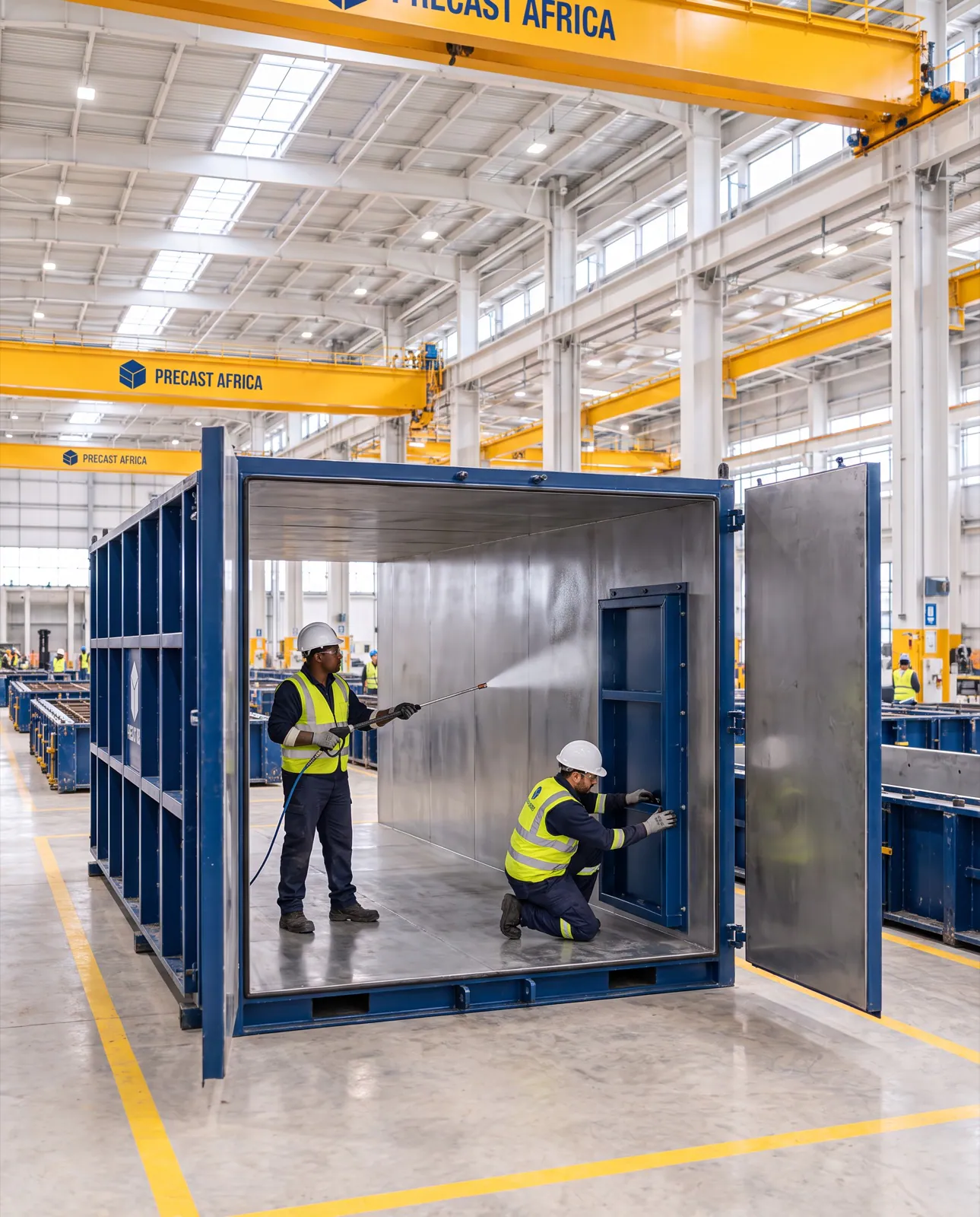
Preparation
Mould cleaned, release agent applied, shutters set for the scheduled openings.
 02
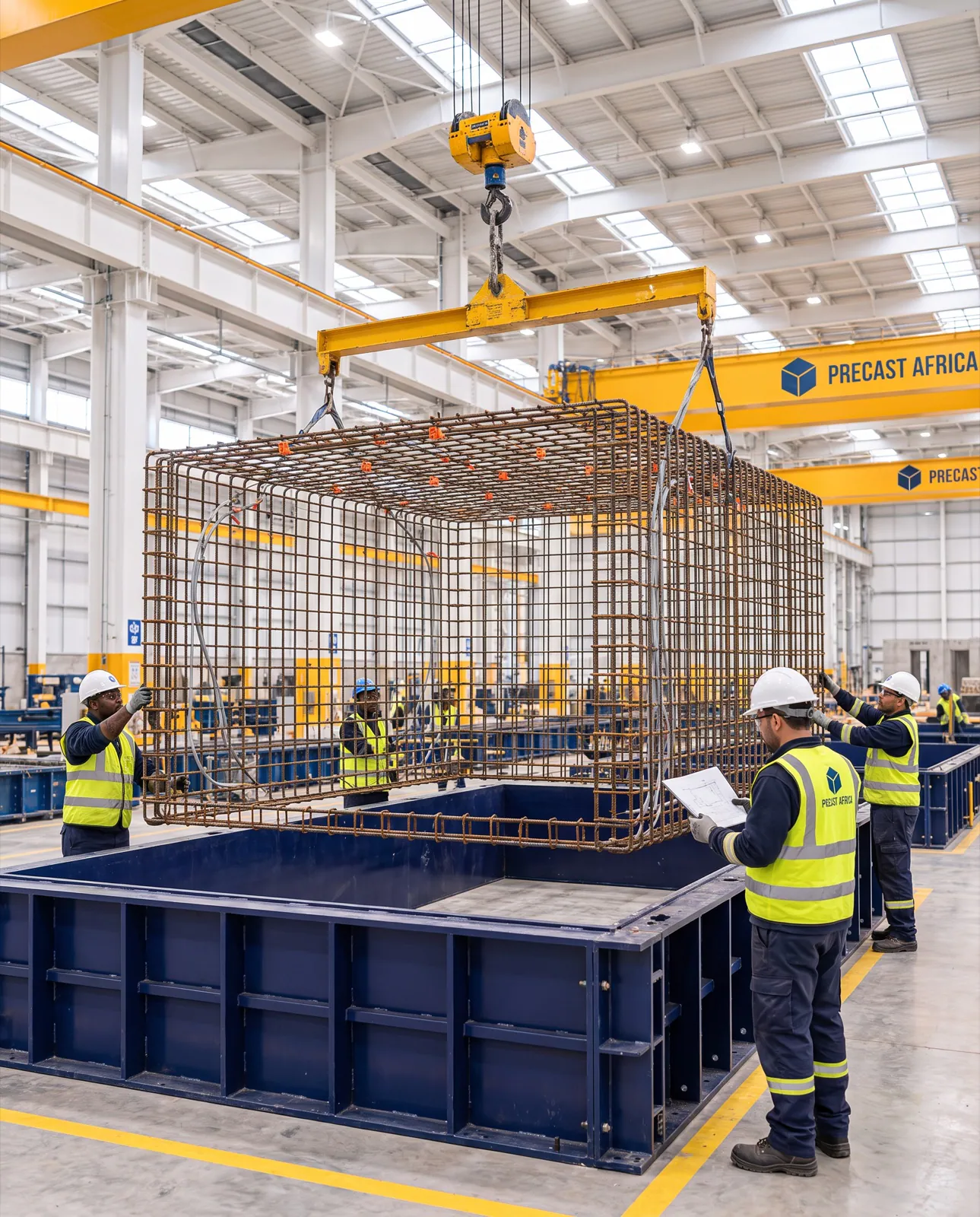
Reinforcement and inserts
Cage placed, cast-ins, service conduits and lifting anchors positioned and checked against the frozen drawing.
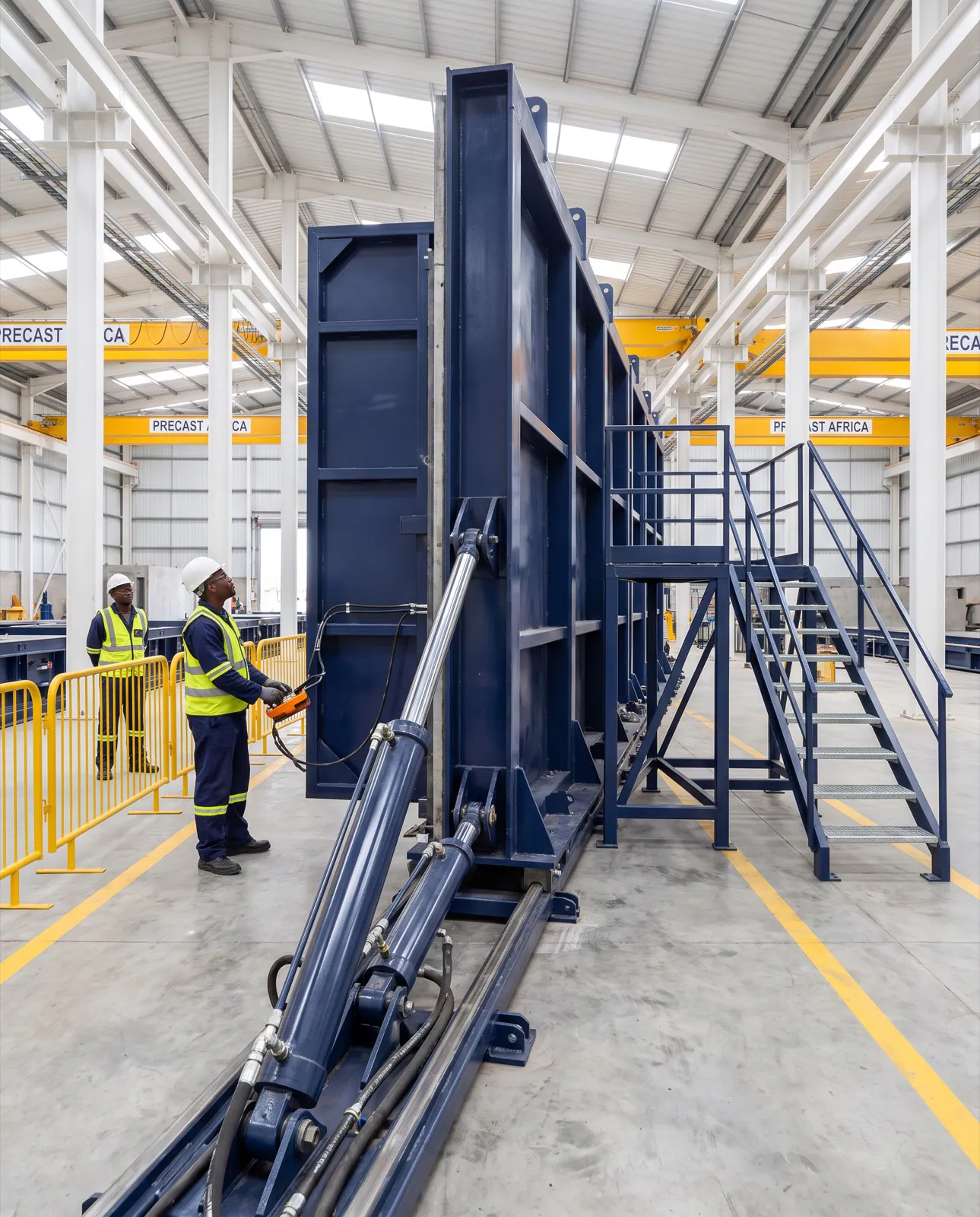 03
Closing
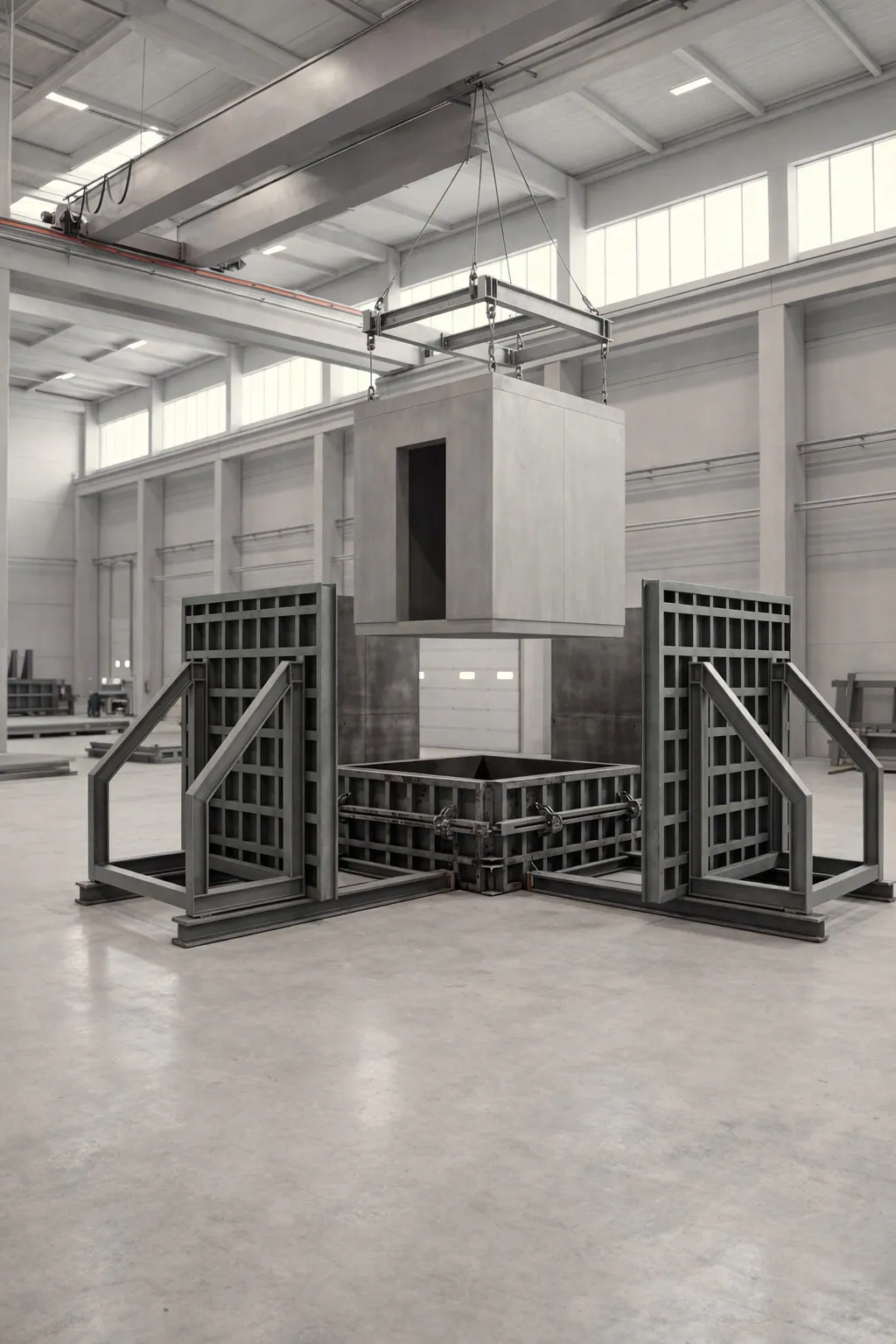
Outer panels closed hydraulically on guided rails and locked transversely; core expanded to position.
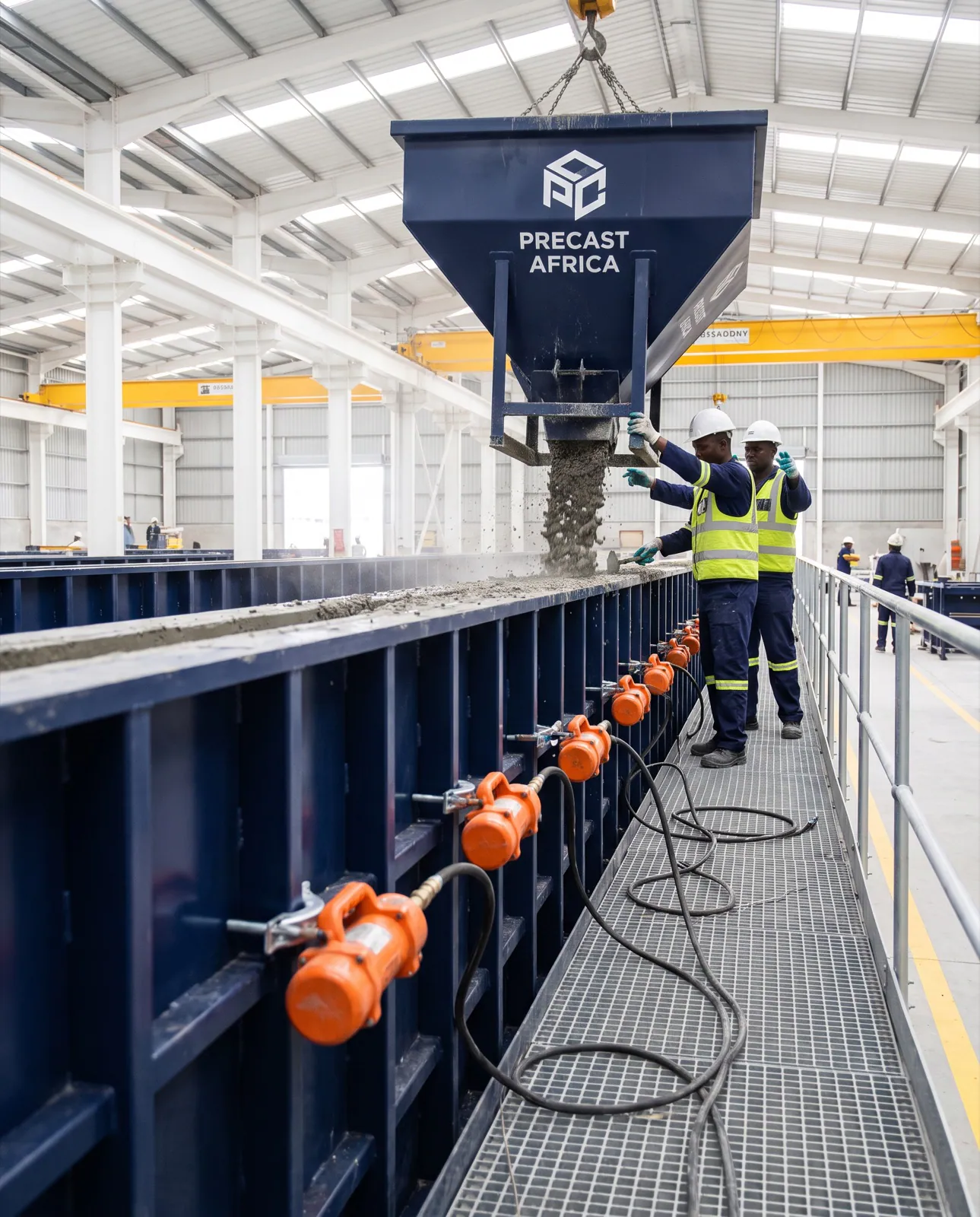 04
Pouring and compaction
Single monolithic pour, compacted pneumatically at 13 000 VPM across approximately 22 independent vibrators.
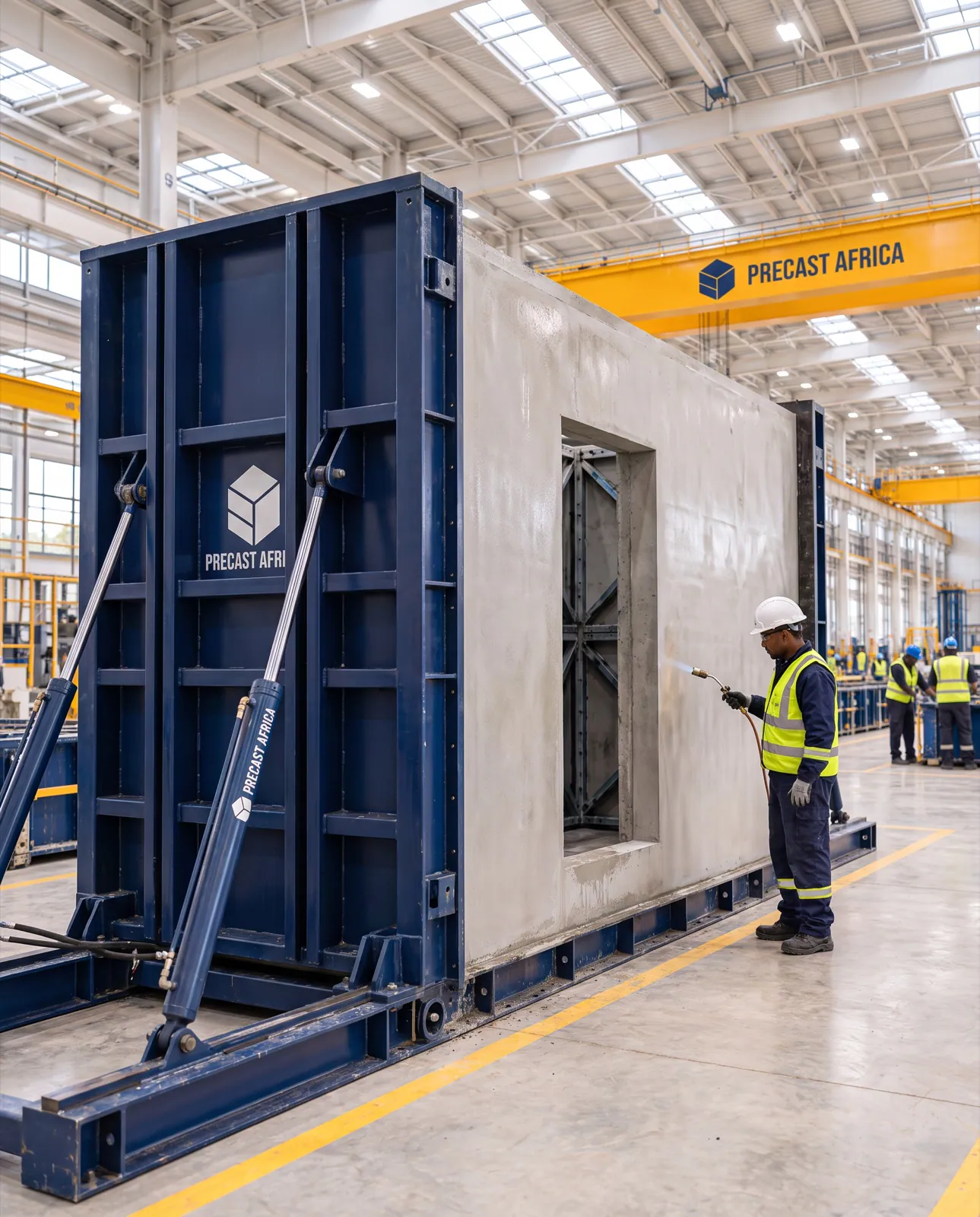 05
Demoulding
Core corners fold inward first, breaking contact with all four wall faces simultaneously, then the outer panels open.
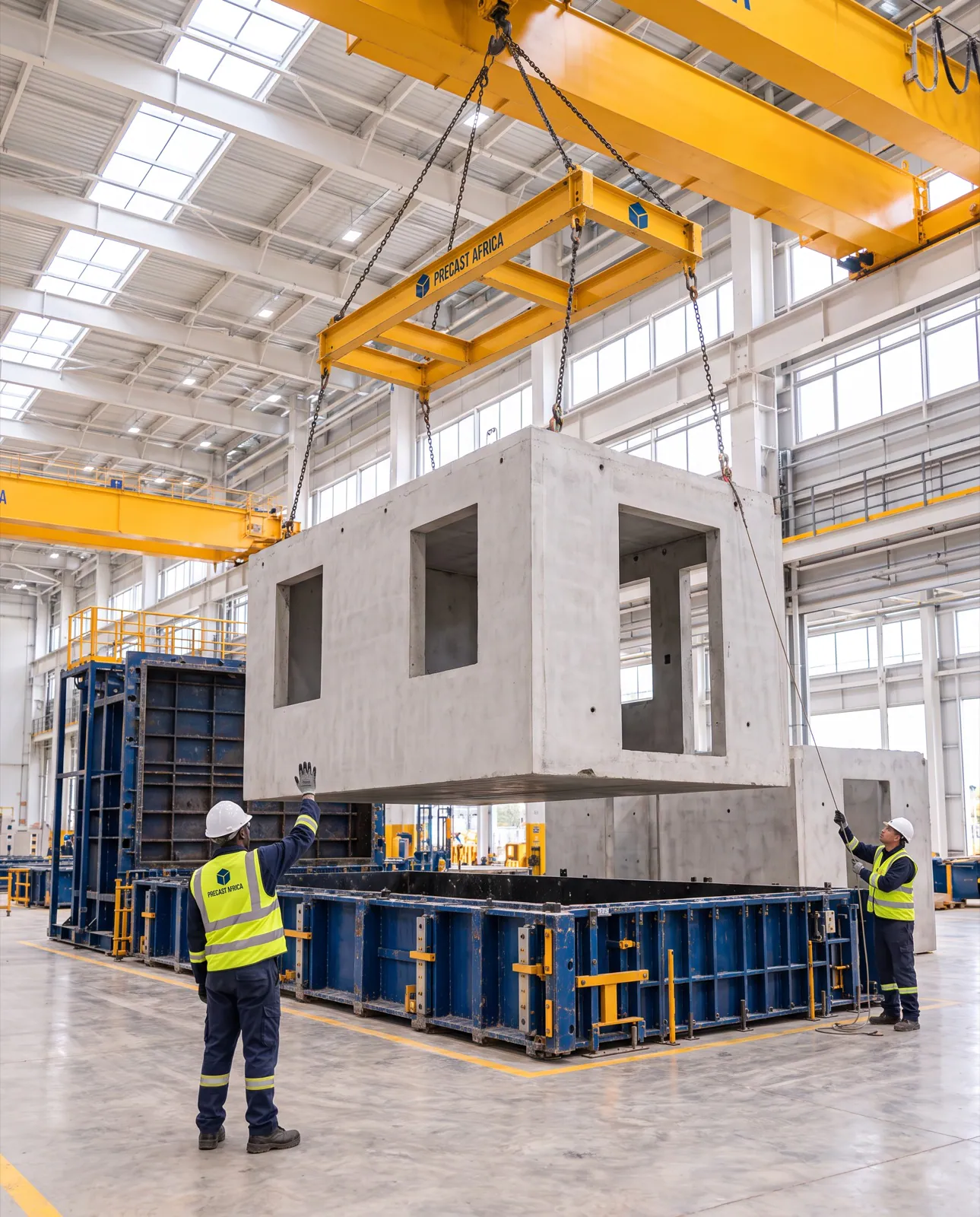 06
Extraction
The module is lifted clear on the 30-tonne rectangular frame, inspected, released and moved to fit-out or yard.
02
Where quality is checked
A routine is only as good as its checks. The cycle is designed with defined hold points, moments where the module cannot move to the next step until someone has inspected and signed off the previous one.
The reinforcement cage, cast-in conduits and lifting anchors are checked against the frozen drawing before the mould closes. Concrete is sampled and tested at each pour. The module is not lifted until the concrete has reached the strength set by the engineer. After extraction, it is inspected, fitted with first-fix plumbing and electrical services, and released only when it has passed.
Hold points in the cycle
- 01
Before closing
Cage, conduits and lifting anchors checked against the frozen drawing.
- 02
At the pour
Concrete sampled and tested.
- 03
Before lifting
Strength reached as set by the engineer.
- 04
After extraction
Inspected and fitted with first-fix services.
- 05
Release
Only when passed. Each result recorded in the module passport.
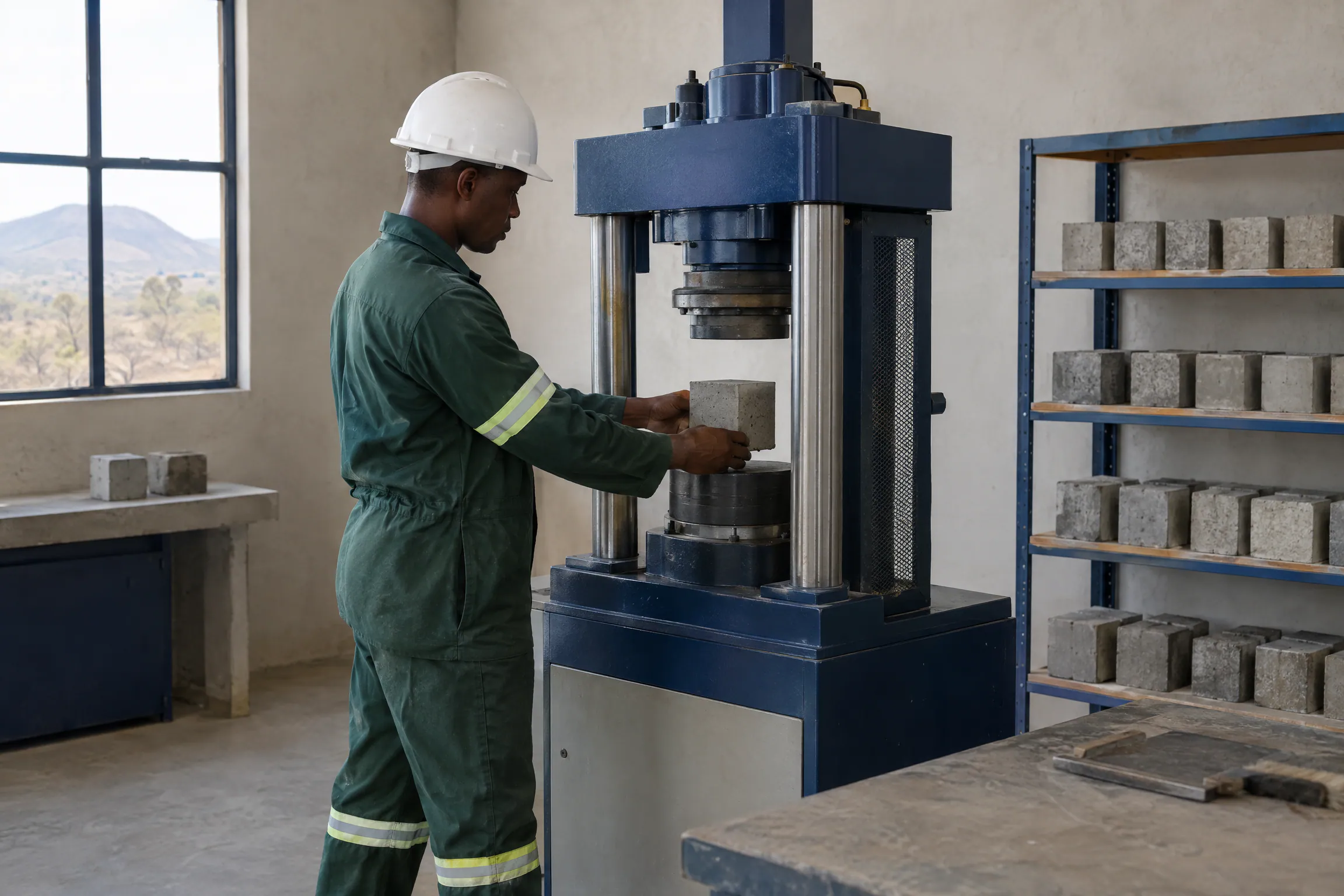
Each result is recorded in the module's passport, a record that follows the unit from the mould to its foundation. If a question arises years later, the answer is in the record, not in someone's memory.
03
Why the routine matters to a developer
For the developer, the value of the cycle is not the speed of a single day. It is that the factory's output can be planned weeks ahead and matched to the site. While modules are cast, foundations and services for the next phase are prepared in parallel. When the site is ready, the modules are.
Factory and site, in parallel
In the factory
- Modules cast on a fixed cycle
- Output planned weeks ahead
On site
- Foundations prepared
- Services for the next phase prepared
Two commitments make it work: a design frozen before casting begins, and a site confirmed ready before modules are dispatched.
That only works if both sides keep their discipline: a design frozen before casting begins, and a site confirmed ready before modules are dispatched. Those two commitments, more than the mould itself, are what turn a factory into programme certainty.
Bronne
The cycle describes the planned process for Precast Africa's factory, based on the equipment manufacturer's specification (July 2026). One cast per mould per production day is a planning baseline to be proven in commissioning, not a warranted rate. Images are artist's impressions.
- Equipment manufacturer's volumetric mould specification, July 2026 (on file)