Sustainability
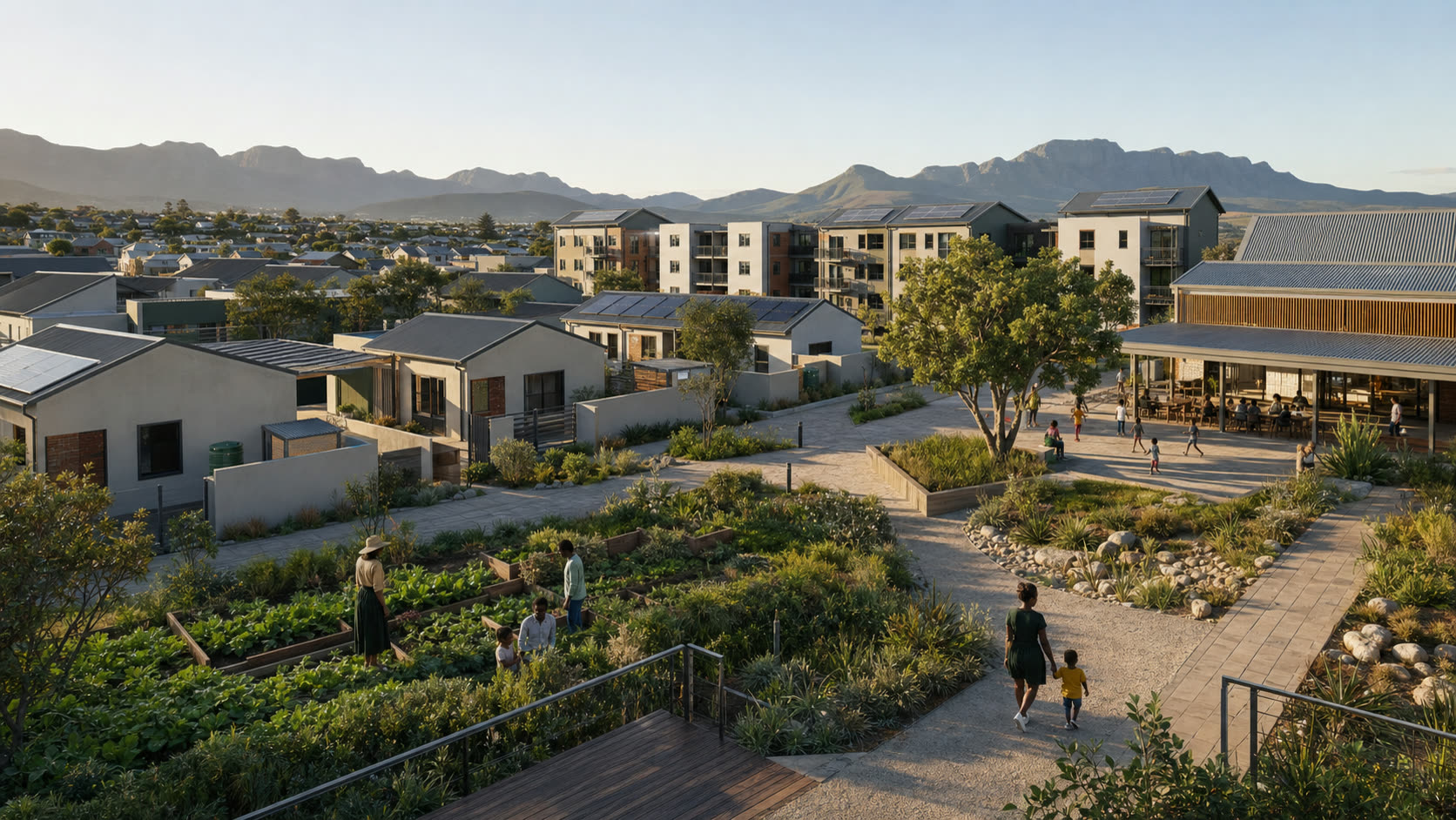
Less waste. Less carbon. More homes. — Sustainability is embedded across the Precast Africa system — in material choices, production control, product durability and business governance — not bolted on afterwards.
Sustainability is embedded across the Precast Africa system — in material choices, production control, product durability and business governance — not bolted on afterwards.
- Focus
- Lower-carbon concrete & waste reduction
- Production
- 60–90% completed off-site
- Design life
- 50+ years
01Our position
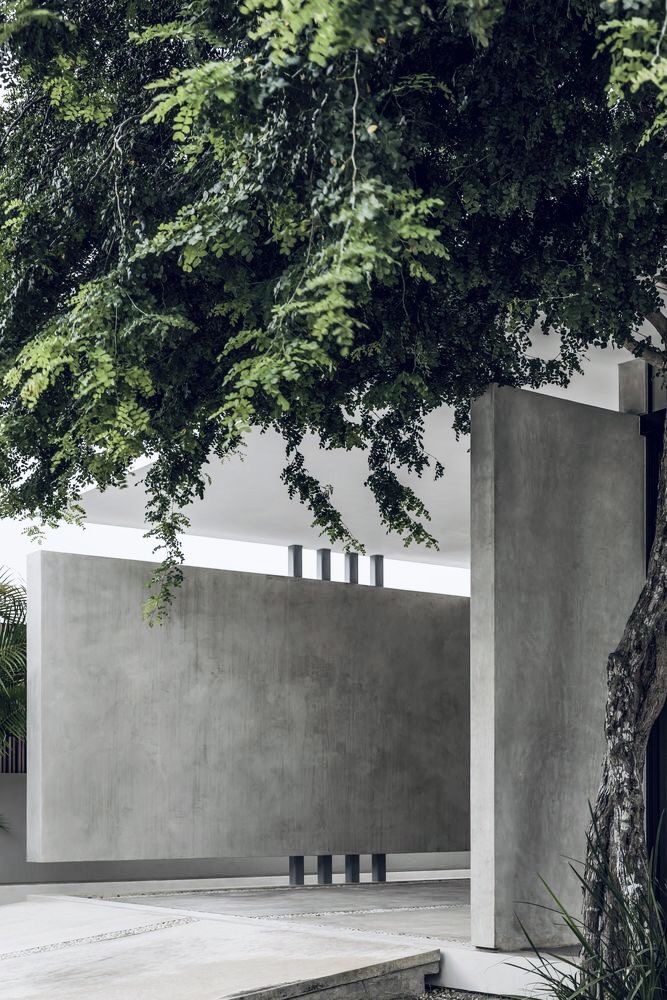
Central to the business model, not peripheral to it.
The PPVC system is designed to reduce waste, improve resource efficiency, support durable construction, and enable faster delivery of quality housing with less disruption on site.
Environmental performance is treated as a design and procurement discipline from the outset — not a reporting exercise completed after the fact. Every material choice, production process and logistics decision carries a sustainability implication, and each is managed within the same production-control framework that governs quality and cost.
Waste
90%
Less waste than equivalent site-built construction.
Off-site
60–90%
Of construction completed in controlled factory conditions.
Lifespan
50+ yr
Long-life concrete modules with low maintenance demand.
Site impact
Minimal
Reduced noise, dust, traffic, and disruption on site.
02Green concrete
Lower carbon. Same strength.
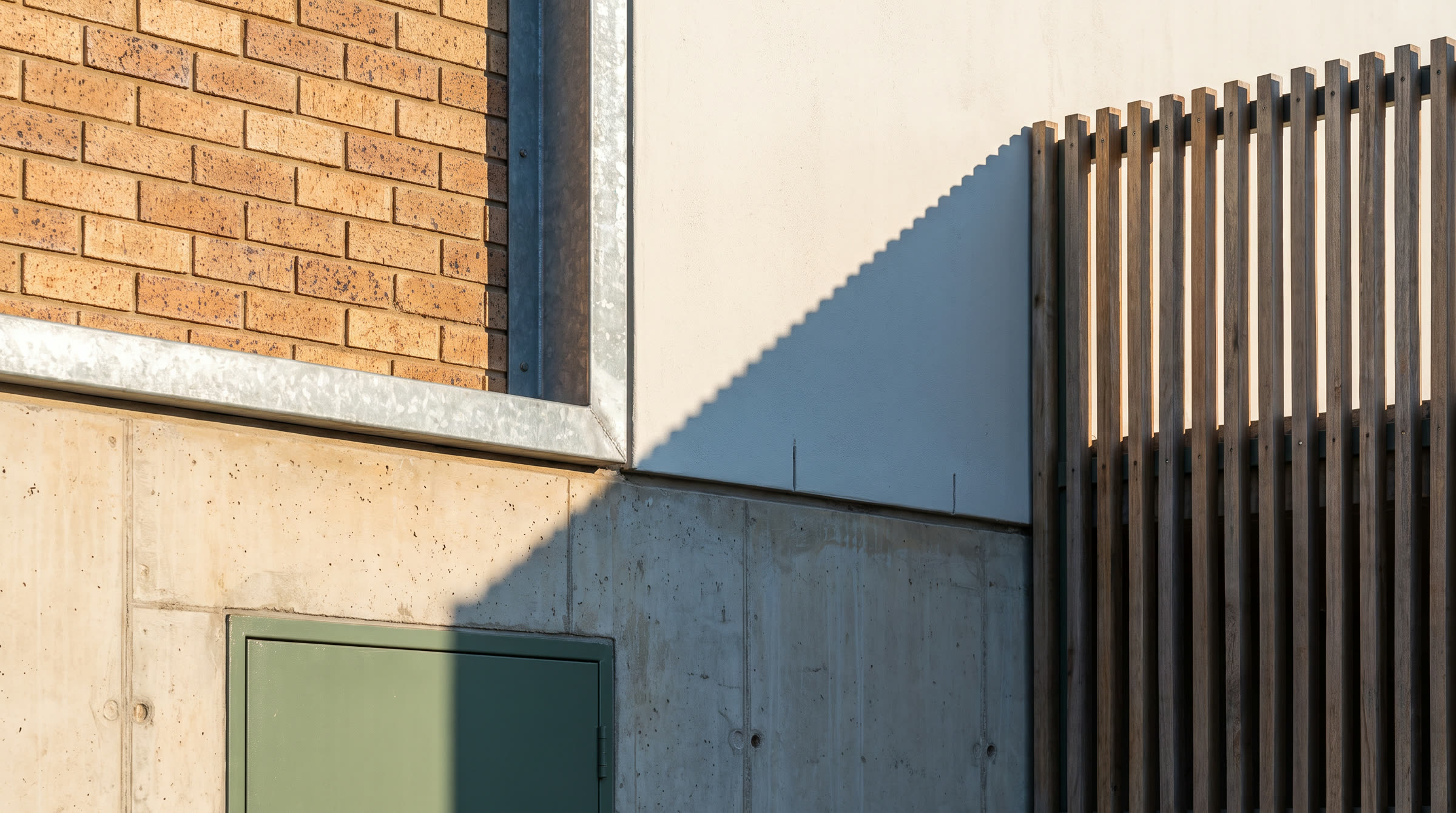
Concrete is the primary material in the PPVC system, so improving its environmental performance is central to our sustainability strategy. We prioritise the development of lower-carbon mixes that maintain the strength, durability, fire resistance, and structural performance required for volumetric construction.
- Lower-carbon concrete mix design
- Cement reduction and engineered optimisation
- Supplementary cementitious materials (fly ash, slag, calcined clay)
- Recycled aggregates in non-critical applications
- Admixture optimisation for strength and durability
- Factory batching control and waste recovery
- Per-module carbon tracking
03Product sustainability
Designed to last. Built to perform.
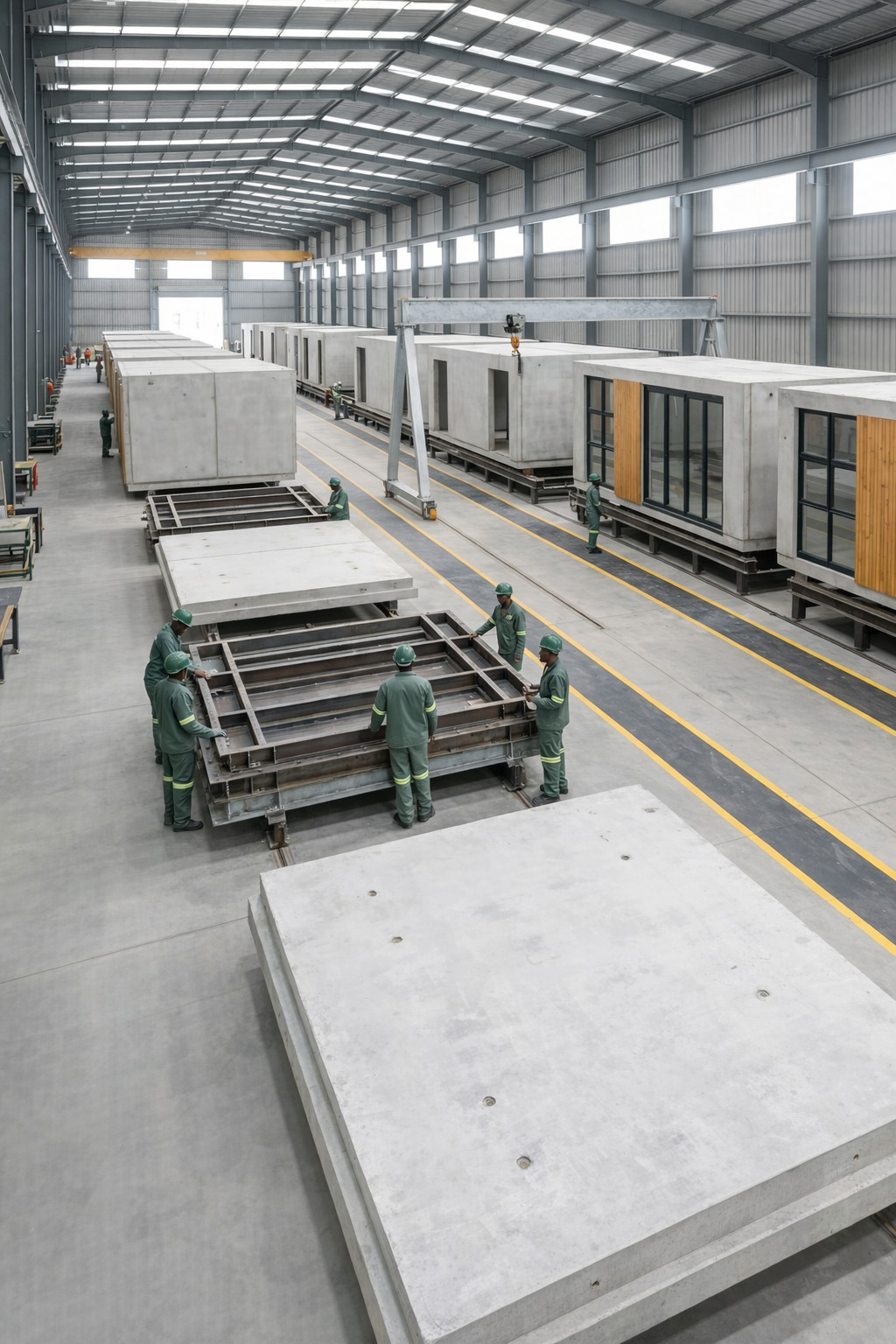
Factory-controlled production, repeatable module design, and engineered material efficiency — reducing the environmental impact of every unit delivered.
Waste
Reduced construction waste
Factory production allows materials to be measured, controlled, reused, and managed more efficiently than traditional site-based construction.
Material
Efficient concrete use
Module design, mould repetition, and engineered structural optimisation reduce unnecessary material consumption.
Site
Lower site disruption
More work completed off-site — reducing noise, dust, traffic, and construction activity on the development site.
Quality
Improved quality control
Controlled manufacturing reduces defects, rework, and material wastage across the production cycle.
Energy
Energy and thermal performance
Modules can be designed with insulation, passive design principles, efficient windows, and thermal comfort in mind.
Water
Water efficiency
Wet-core modules can integrate water-efficient fixtures, plumbing layouts, and service systems by default.
Local
Local material sourcing
Where possible, aggregates, cementitious materials, reinforcement, fittings, and finishes are sourced locally.
Durability
Long service life
Precast concrete modules are designed to provide strong, low-maintenance building structures with long-term performance.
Reuse
Adaptability and repeatability
Standardised modules can be reused across different layouts and project types, reducing redesign and improving efficiency.
04Business sustainability
People. Skills. Supply chains.
Sustainability is a commercial discipline as much as an environmental one. We build resilience into the company — through plant utilisation, supplier diversification, skills development, and governance reporting from day one.
01
Financial resilience scaled to secured offtake
02
Repeatable project pipeline with framework agreements
03
Standardised modules driving plant utilisation
04
Milestone-based payment terms reducing cash-flow strain
05
Local job creation across production, QA, and logistics
06
Skills development in industrialised construction
07
Factory-based health and safety advantages
08
Multiple approved suppliers for key materials
09
Quality, safety, and environmental KPIs tracked
10
Community impact through faster housing delivery
05Sustainability KPIs
We measure what we ship.
From the first project, performance is tracked across material efficiency, energy, water, waste, quality, safety, and community impact.
Carbon
Embodied carbon per module
Tracks the carbon impact of each module produced over time.
Cement
Cement content and replacement %
Monitors embodied-carbon intensity and lower-carbon cementitious uptake.
Waste
Waste generated per module
Measures manufacturing efficiency and waste reduction performance.
Strength
Concrete strength compliance
Ensures sustainable mixes still meet all structural performance requirements.
Water
Water used per module
Tracks production water efficiency across batching and curing cycles.
Energy
Energy used per module
Plant energy efficiency tracked per module and per cycle.
Local
Local supplier percentage
Measures local economic participation across the supply chain.
Quality
Defect rate at handover
Measures product quality and durability outcomes at the unit level.
Safety
Safety incidents
Tracks worker safety and operational responsibility on factory and site.
Build housing that lasts.
Reduce waste. Develop green concrete. Optimise material use. Train workers in modern methods. Track sustainability performance from project one.
Discuss sustainability- Enquiry types
- Technical · Offtake · Funding