Industrialised construction is usually sold on speed. Speed is the visible part, but it is not really where the value sits — it is a symptom of something more useful, which is that the work has been moved somewhere it can be controlled. Once that happens, several different kinds of saving follow at once, and they are easy to confuse with one another.
So it is worth separating them. Below is each of the four headline figures, what it is measuring, and the commercial mechanism underneath it. Each takes cost out of a development in a different place: out of the calendar, out of the risk register, out of the materials bill, and out of the fifty years after handover. The environmental reading of the same four figures is a separate argument, and it is made on the sustainability pages rather than here.
The four figures
- Programme
- 40%
- Faster delivery vs. comparable in-situ construction
- Off-site
- 90%
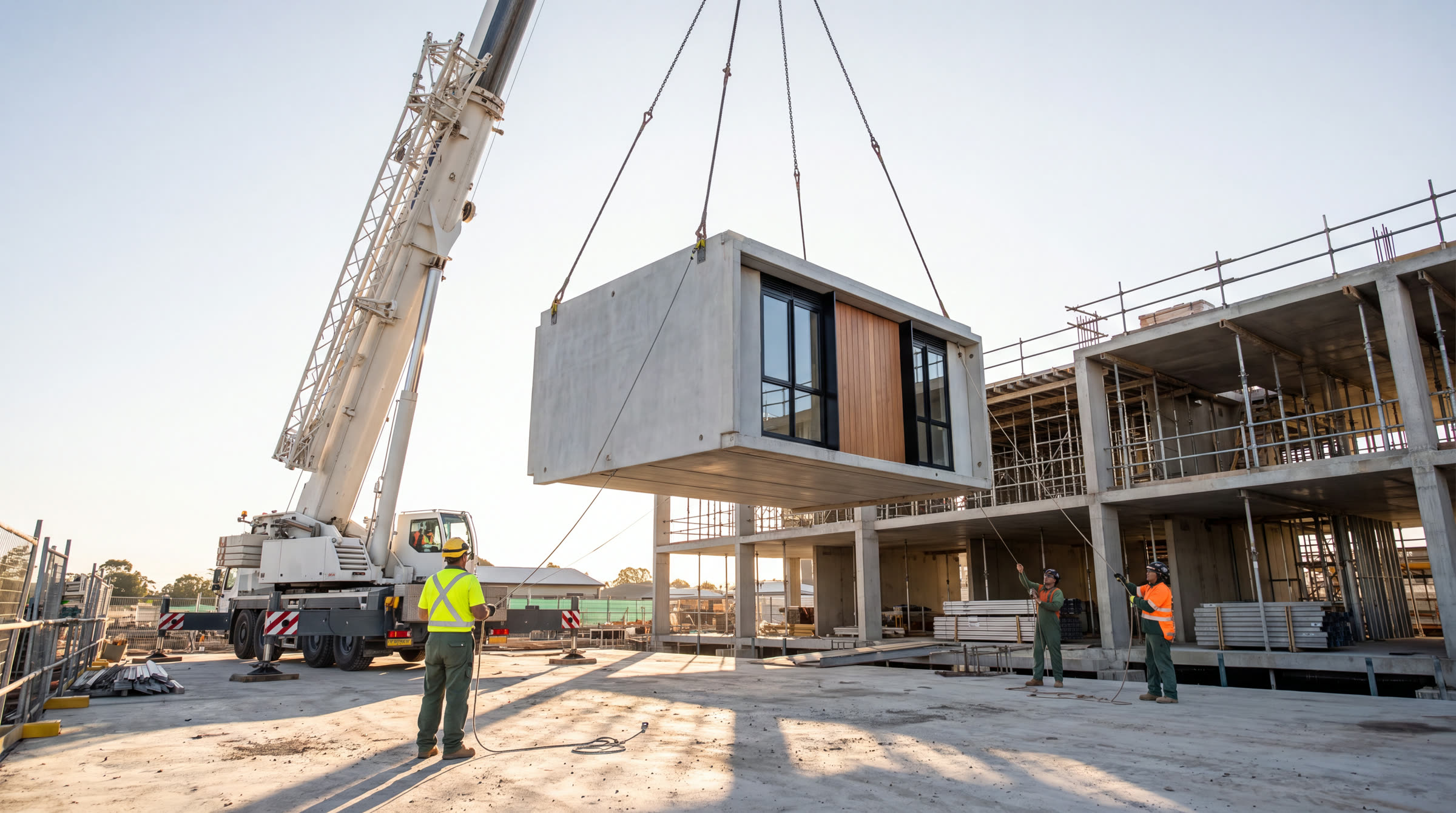
- Of construction completed in the factory
- Waste
- 90%
- Up to 90% less construction waste vs. traditional methods
- Durability
- 50+ yr
- Engineered design life, low-maintenance concrete
40% faster — the saving is in the calendar, not the build
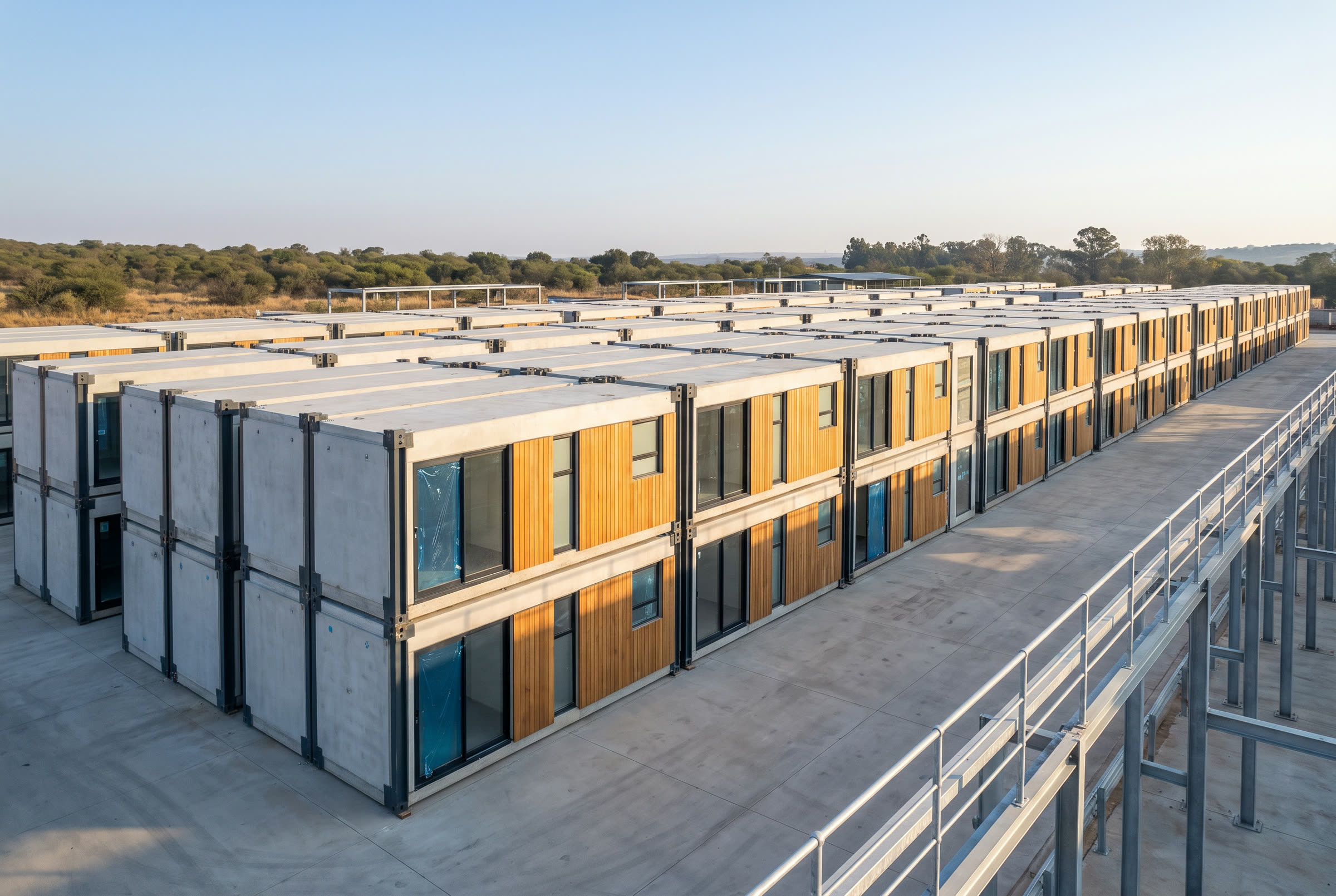
A shorter programme does not make the building cheaper to make. It makes it cheaper to own while it is being made. Every month a development is under construction is a month of financing, insurance, site establishment, security, supervision and professional time — costs that accrue against a building that is not yet earning anything.
Compressing the programme compresses all of it at once. It also moves the revenue forward: a residential scheme that completes sooner starts letting or transferring sooner, which changes the shape of the cash flow rather than just its total. For social and student housing, where a delivery date is tied to a term or a policy commitment rather than a market, the same compression buys certainty instead — the ability to promise a date and hold it.
A shorter programme does not make the building cheaper to make. It makes it cheaper to own while it is being made.
90% off-site — the saving is in the risk that never happens
This figure is the one that produces the other three. When nine tenths of the work happens indoors, weather stops being a programme risk. Sequencing stops depending on which trades arrived. Quality stops depending on conditions that vary hour to hour.
The financial effect is mostly in what does not occur: fewer standing-time claims, fewer weather extensions, less rework, a smaller and shorter site establishment, and less disruption to whatever is already operating around the site. None of that appears as a line item, which is exactly why it is easy to leave out of a comparison — the costs avoided are invisible in a way the costs incurred never are.
90% less waste — the saving is material that was never bought
Waste is usually filed as an environmental problem, which lets it escape the cost conversation. It should not. Waste is material that was specified, bought, transported, handled, stored, damaged, and then paid for a second time to be taken away — and on a site-built scheme it is priced in as an allowance rather than eliminated.
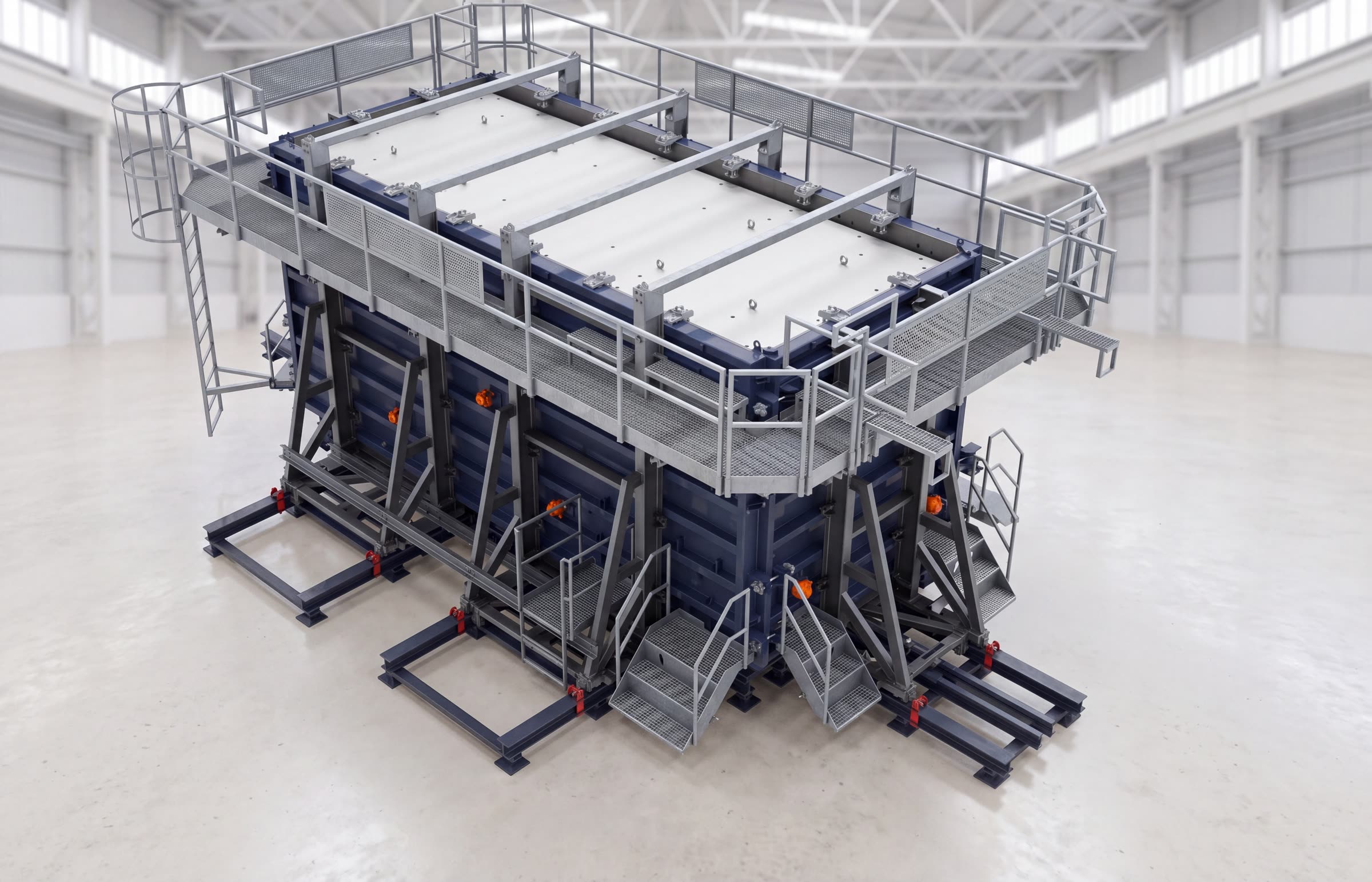
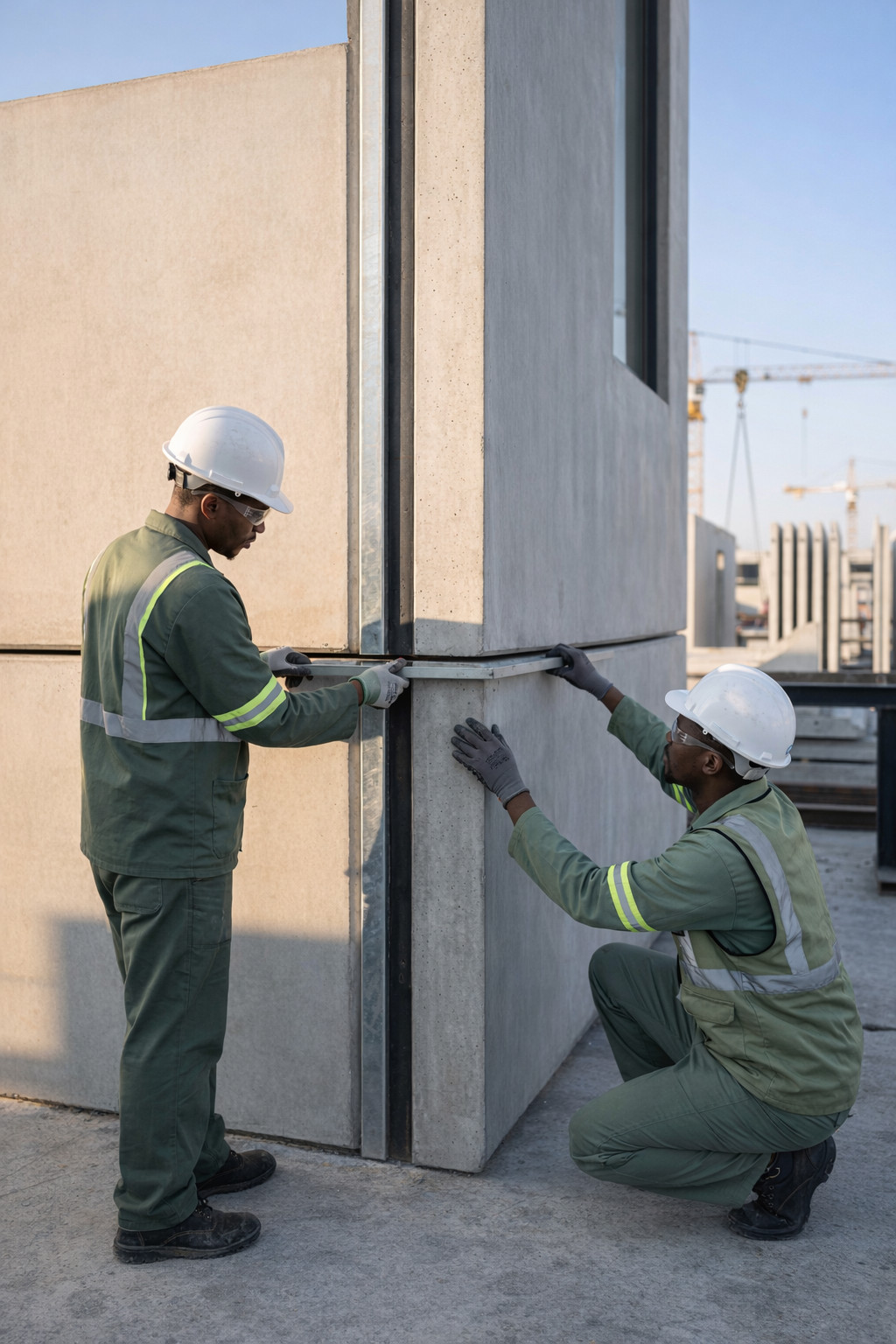
A factory cuts it at the source. Quantities are known before the pour because the module is the same every time, offcuts are captured and reused rather than swept into a skip, and formwork is permanent steel tooling instead of timber consumed job by job. In an industrialised process the waste line is one of the very few that genuinely approaches zero rather than merely improving — and a line that approaches zero is worth more to a budget than one that improves by a tenth.

50+ years — the saving is spread across the whole life
A fifty-year design life changes which question is worth asking. Capital cost is what a building costs to put up; whole-life cost is what it costs to keep. Monolithic reinforced concrete, with no wall-to-roof joint and openings cast rather than cut, removes most of the places where a building normally begins to fail — and with them the maintenance cycle that follows.
For anyone holding an asset rather than selling it on, that is the figure that matters most: an institution, a public programme or a long-term landlord is buying five decades of service, not a handover. Judged over that horizon, a maintenance budget avoided every year compounds into a larger number than most capital-cost differences at tender.
What these figures are, and what they are not
Each figure above is a performance characteristic of the system, not a quotation. What a specific scheme saves depends on its site, its typology, its storey count, its finishes and its programme — and the honest answer to “what will this cost” is always a range with its assumptions and exclusions stated, issued against a dated rate book, not a number quoted from a web page.
What these four figures do tell you is where to look. If a comparison against conventional construction only counts the build cost, it is measuring the one place where industrialised construction has the least to say — and missing the calendar, the risk, the waste and the fifty years.
The same four mechanisms also carry an environmental and a governance reading, which matters to funders applying ESG tests to a development. That case is made separately, in the ESG article and on the sustainability pages.
Figures as published on the Precast Africa homepage benefits summary. All performance claims remain subject to approved engineering and product-specific certification; project-specific cost outcomes are issued as a range with assumptions and exclusions, against a dated rate book.